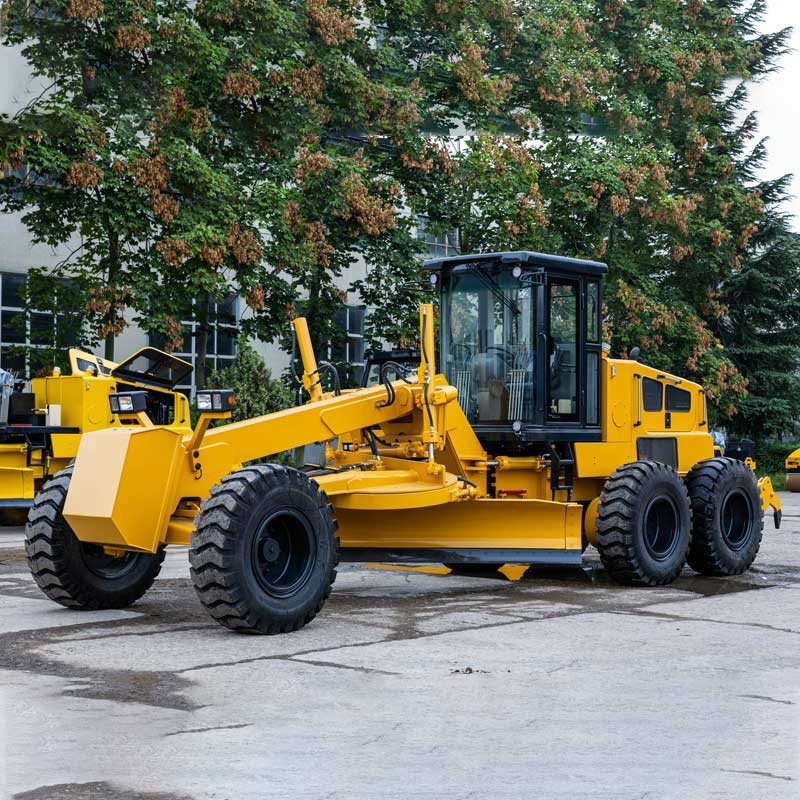

Motor Grader Operation and Maintenance Guide
I. Operation Instructions
1. Pre-Operation Preparation
Before starting the motor grader, conduct a comprehensive inspection. Check the fuel, oil, and hydraulic fluid levels to ensure they meet the specified standards. Inspect the tires for proper inflation and any signs of damage, and examine the blade, moldboard, and other attachments for cracks or loose components. Verify that all control levers are in the neutral position and that the braking system is functioning correctly. Additionally, clear the operation area of any obstacles and ensure there are no personnel in the vicinity.
2. Starting the Equipment
Insert the key into the ignition and turn it to the “on” position to activate the electrical system. Allow the engine to warm up for a few minutes, especially in cold weather, to ensure optimal performance. Gradually increase the throttle to start the engine, listening for any unusual noises. Once the engine is running, engage the parking brake and shift the transmission to the desired gear.
3. Basic Operation
-
Blade Control: Use the control levers to adjust the blade’s height, angle, and pitch. For leveling operations, lower the blade to the desired depth and move the grader forward in a straight line. To create a sloped surface, adjust the blade’s angle accordingly. When working on uneven terrain, make small, gradual adjustments to the blade to avoid sudden jolts.
-
Maneuvering: Use the steering wheel to control the direction of the grader. When turning, reduce the speed to ensure stability. For tight turns, use the differential lock to improve traction, but remember to disengage it once the turn is complete to avoid damaging the tires.
-
Working on Slopes: When operating on slopes, always travel across the slope rather than up or down to prevent the grader from tipping over. Maintain a slow and steady speed, and avoid making sudden changes in direction or speed.
4. Shutting Down the Equipment
After completing the work, move the grader to a flat and safe area. Lower the blade to the ground and shift the transmission to neutral. Gradually reduce the throttle and turn off the engine. Engage the parking brake and remove the key from the ignition. Conduct a final inspection of the equipment to check for any damage or issues that may have occurred during operation.
II. After-Sales Maintenance Methods
1. Daily Maintenance
-
Cleaning: After each use, clean the grader thoroughly to remove dirt, debris, and any remaining material from the blade, chassis, and other components. Use a high-pressure washer to clean hard-to-reach areas, but avoid directing water at the electrical components and bearings.
-
Fluid Checks: Check the fuel, oil, hydraulic fluid, and coolant levels daily. Top up any fluids that are low, using the recommended types and grades as specified in the operator’s manual.
-
Inspections: Inspect the tires, brakes, and steering components for any signs of wear or damage. Check the blade and attachments for loose bolts or cracks, and tighten or repair as necessary.
2. Weekly Maintenance
-
Lubrication: Lubricate all moving parts, including the blade pivot points, steering linkage, and hydraulic cylinders, using the recommended lubricants. Follow the lubrication schedule provided in the operator’s manual to ensure proper maintenance.
-
Filter Replacement: Check and replace the air filter, oil filter, and fuel filter as needed. Clogged filters can reduce engine performance and cause damage, so it is important to replace them regularly.
-
Electrical System Inspection: Inspect the battery terminals for corrosion and clean them if necessary. Check the wiring and connectors for any signs of damage or loose connections, and repair or replace as needed.
3. Monthly Maintenance
-
Engine Inspection: Conduct a detailed inspection of the engine, including checking the spark plugs, belts, and hoses. Replace any worn or damaged parts, and adjust the valve clearance if necessary.
-
Hydraulic System Inspection: Check the hydraulic system for leaks, and inspect the hoses and fittings for any signs of damage. Test the hydraulic pressure to ensure it meets the specified standards, and adjust if needed.
-
Blade and Attachment Maintenance: Inspect the blade for wear and tear, and sharpen or replace it if necessary. Check the moldboard and other attachments for any signs of damage, and repair or replace as needed.
4. Annual Maintenance
-
Comprehensive Inspection: Conduct a comprehensive inspection of the entire grader, including the engine, transmission, hydraulic system, and chassis. Check for any signs of wear, corrosion, or damage, and repair or replace any components as needed.
-
Professional Servicing: It is recommended to have the grader serviced by a professional technician annually. They can perform a detailed diagnostic test and address any potential issues before they become major problems.
-
Storage Preparation: If the grader will be stored for an extended period, prepare it by draining the fuel and coolant, lubricating all moving parts, and covering it with a protective cover to prevent dust and moisture from entering.